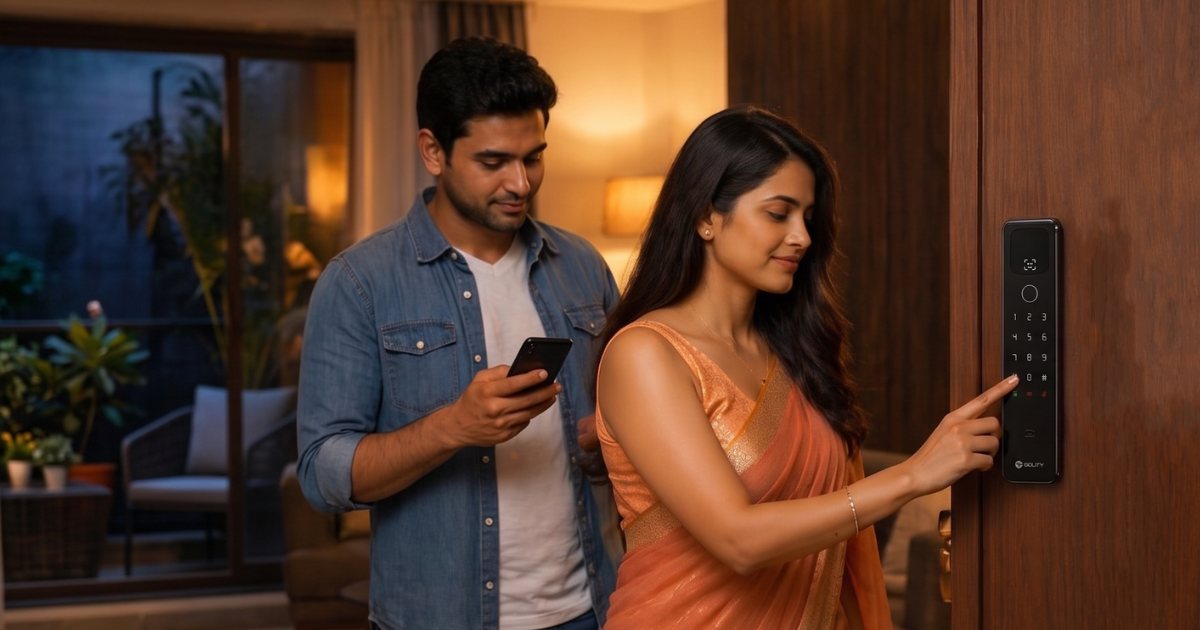
There’s this small, everyday thing most of us have experienced at some point, leaving the house, locking the door, walking away… then suddenly thinking, “Did I really lock it?” That thought alone will stay in your head for hours. Sometimes it even makes people turn around to look. It’s not really about forgetting, it’s about not being sure.
For years, the standard for securing a home has been the traditional lock. They’ve done well enough in simpler times. But today, the way that homes function has changed. People leave town more often, deliveries come when no one is home, multiple people need access at different times, and security concerns are more real than ever. In this sort of lifestyle, depending on just a physical key starts to feel limiting. Not unsafe necessarily, but incomplete.
That’s where smart door locks come into play. Not a luxury upgrade, but a practical solution to modern-day problems. This guide walks through everything important: what smart locks are, how they work, what problems they solve, which type is best for different needs, and what to consider before buying.
What Exactly Is a Smart Locks?
Instead of jumping into technical definitions, it helps to understand this step by step.
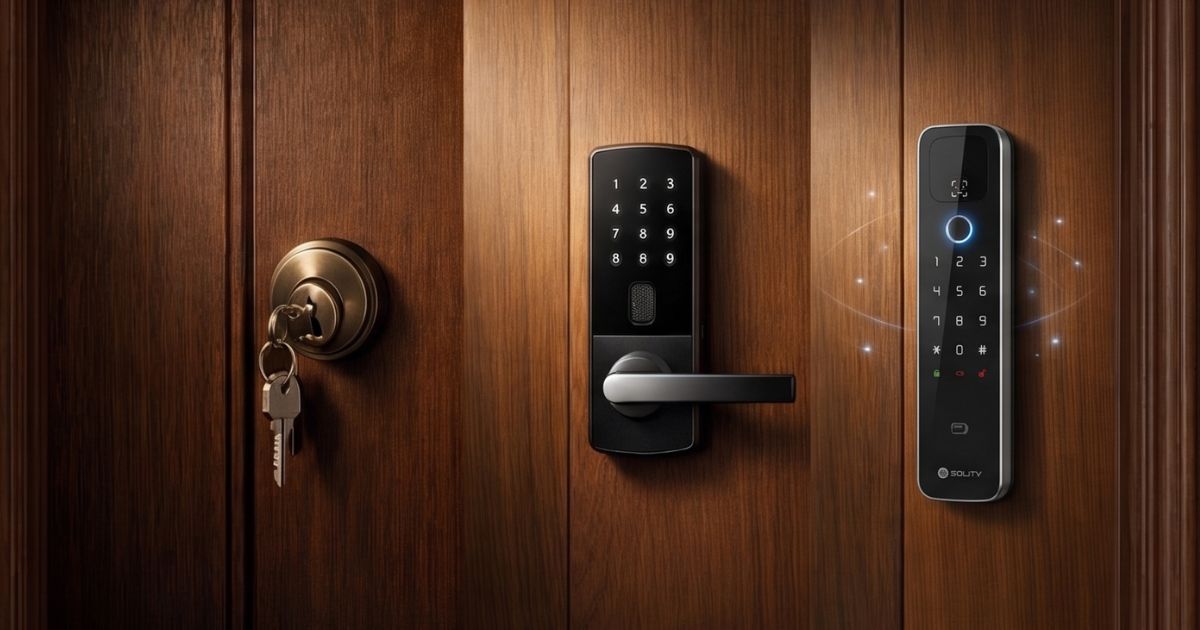
- A traditional door lock
This is the most familiar system. It works with a physical key. If someone has the key, they can get in.” If the key is lost, duplicated, or shared, then the control is lost as well. There’s no visibility. No tracking. No flexibility. - A digital door lock
This is the initial level of upgrade. It removes the need for carrying keys around and replaces physical keys with PIN codes, fingerprints, or RFID cards. It solves the problem of carrying keys, but still, access is limited to people who are physically present. - A smart door lock
This adds connectivity and control to take things further. Smart home locks connect to a mobile phone, give remote access, allow for the creation of temporary entry permissions, and maintain a record of who entered and when.
The difference is not just in features, it’s in the experience of security. No longer about locking the door and hoping everything’s alright. It’s about staying aware even when you’re not physically there.
Also Read – How to Pick the Best Smart Door Lock in India
The Problems a Smart Locks Actually Fixes
Many everyday security issues are often ignored until a problem occurs. A closer look shows clear gaps in traditional systems.
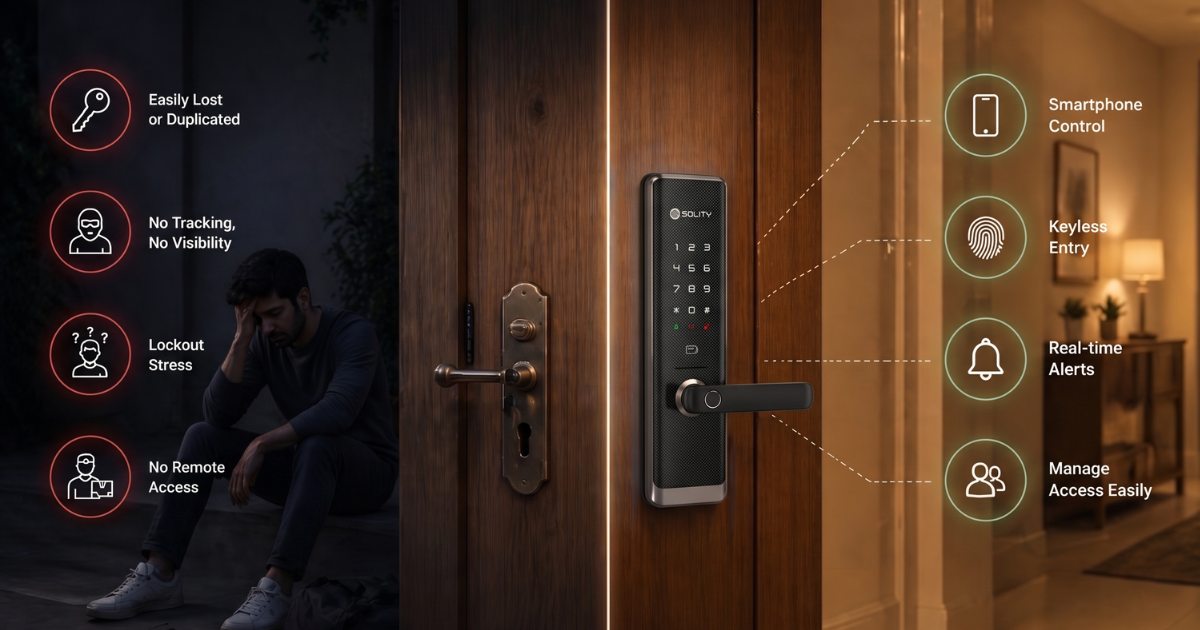
- Keys get duplicated more often than expected
People often give spare keys to house help, relatives, neighbours, or tenants. And as time goes on, it becomes almost impossible to track how many copies there are. - No way to track entry
Traditional locks leave no record. No way to verify it if someone enters in the absence of the owner. - No control when away
No matter if it’s a delivery, a guest, or a service professional, the access is entirely dependent upon someone being physically there. - Lockouts are inconvenient and stressful
Keys can be lost or forgotten inside, which can cause unnecessary panic, especially at odd hours. - Security becomes reactive instead of proactive
In normal locks, action is taken only when something is wrong. There is no real-time system to monitor or control access.
These are real problems, and smart locks for home solve them easily. Access can be controlled based on time, need and situation instead of reacting to situations without being physically present all the time.
Which Type of Smart Locks Is Right for You?
Not all smart locks are built the same, and the right one really depends heavily on your door and situation. Here’s a quick breakdown:
- Push-Pull Locks – Modern and sleek, usually flush-mounted. Ideal for luxury flats, bungalows and offices where aesthetics are as important as security.
- Mortise Locks – These fit into the body of the door itself and are some of the more robust options available. Good for main entry doors where strength is the priority.
- Rim Locks – Surface-mounted on the inside of the door, making installation pretty straightforward. Great for homes or rentals where the existing door structure can’t be modified much.
- Cabinet Locks – Compact biometric or digital locks designed for drawers, almirahs, and storage units. Perfect for securing documents, valuables, or anything that shouldn’t be available to everyone in the house.
- Video Door Phone – Combines a camera, intercom, and sometimes lock control in one unit at the entrance. Right for anyone who wants to see and speak to a visitor before letting them in.
Five Things Worth Thinking About Before Buying Smart Locks
It helps to have a clear head on a few things before walking into a showroom or adding something to a cart:
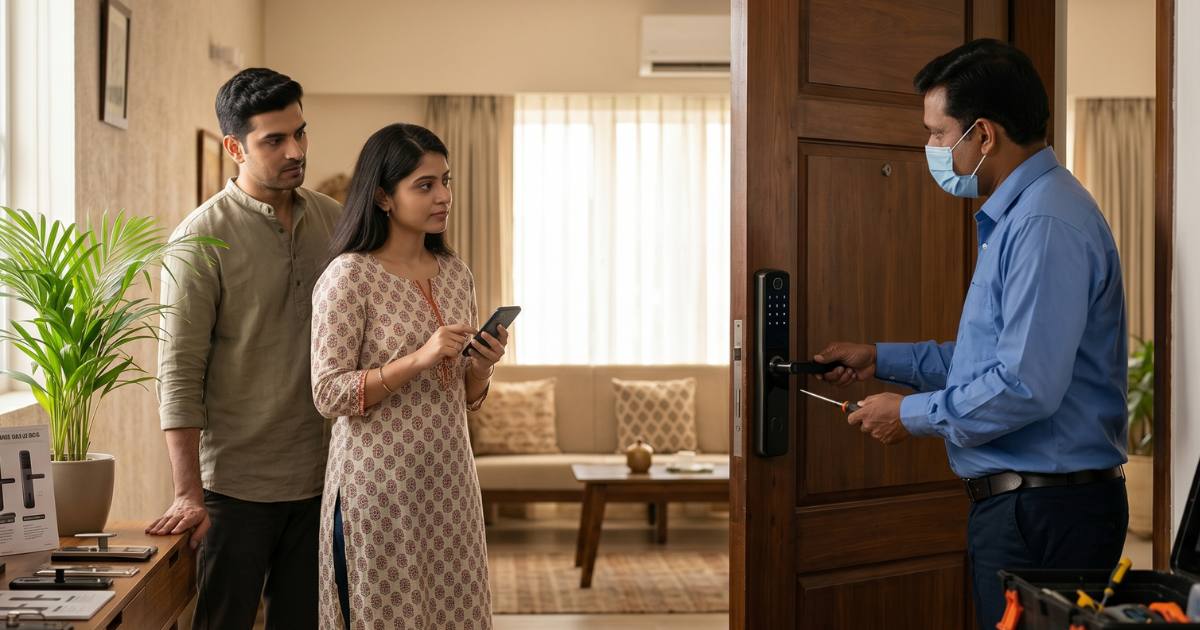
- Door type: Different requirements apply to wood, metal and glass doors. Not all locks are compatible with all doors. Attempting to install a lock on the wrong surface can damage both the lock and the door frame.
- Number of users: A single professional living alone has very different needs than a family of seven or a business with rotating staff. Consider how many access credentials (fingerprints, PINs, cards) the lock can support.
- Remote access needed: If checking or controlling the lock remotely is important, a WiFi smart lock model is necessary. For homes in areas with patchy internet, or where the use case doesn’t require remote control, a Bluetooth-only lock may be perfectly adequate and often, more affordable.
- Budget: A lock costing ₹8000 and one costing ₹25000 cannot be compared on the same parameters. The honest answer is that both can be secure. The premium end has better build quality, more access methods and longer warranty support.
- After-sales support: This is the one that gets ignored most often and causes the most regret. What about when the battery dies at midnight, or the firmware needs to be updated, or a fingerprint fails to register properly? Having a local, responsive support system matters far more than the lock’s spec sheet.
What Does a Smart Locks Cost in India?
In India, there are three broad bands of smart lock pricing, and knowledge of these makes decision-making much simpler.
Entry-level (₹5,000 – ₹10,000): These are typically PIN + RFID card locks with basic build quality. They do work, better than regular locks, but tend to use cheaper components and have limited support. Fine for a secondary door or low-traffic cabinet.
Mid-range (₹10,000 – ₹25,000): This is the perfect range for most homeowners. Good fingerprint sensors, several access options, decent weather resistance, and meaningful warranty coverage. Brands like EPIC comfortably sit in this range with models trusted across India.
Premium (₹25,000 and above): Push-pull designs, Solity-level build quality, anti-tamper alarms, app connectivity, and longer warranty periods. Worth it for a primary entrance door, a business, or anyone who simply doesn’t want to think about the lock again for years.
What makes the price go up? Sensor accuracy, quality of materials (zinc alloy versus cheaper metals), quality of encryption, and depth of the software ecosystem around the lock. Choosing the cheapest option is not just a compromise in features; it can mean a lock that fails when it matters most, with nobody to call.
Also Read – Smart Door Lock vs Traditional Lock – Which Is Better for Your Home?
Why JAL Digital System Is the Right Place to Start
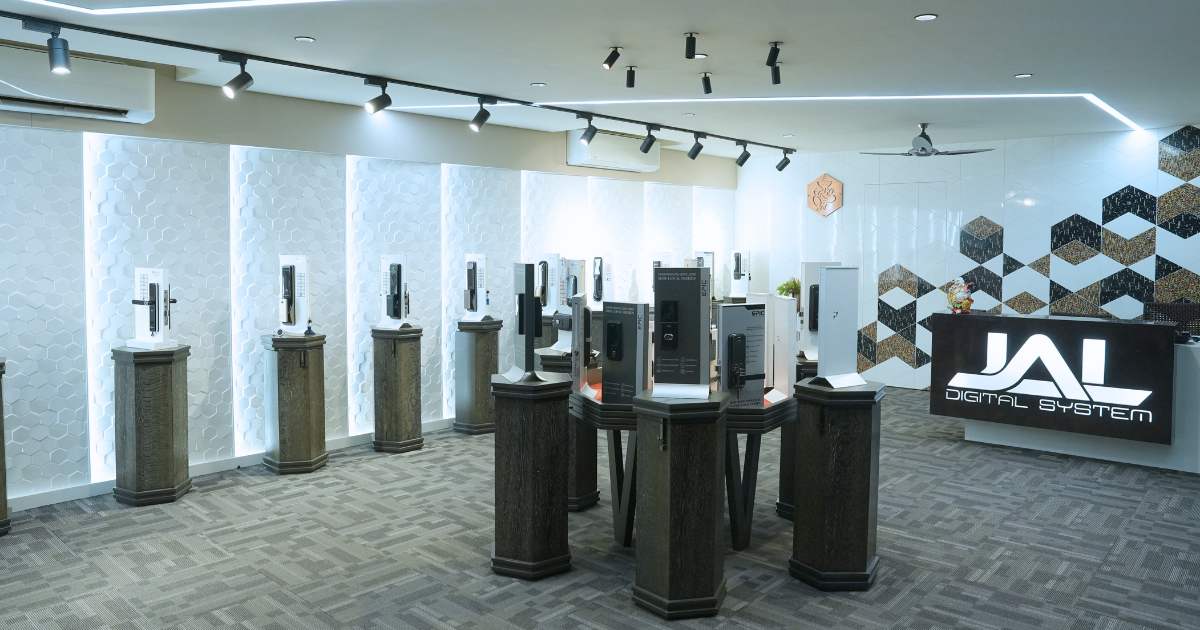
For anyone in India, especially in Ahmedabad, who wants to make this switch, there are a few things about the JAL Digital System worth knowing.
They are authorised dealers for Solity, EPIC and ADEL, three of the most respected names in smart lock technology. That matters because it means genuine products, proper warranties, and access to real brand support, not something you get when buying from unauthorised sellers.
JAL Digital System operates what is widely recognised as India’s biggest smart lock showroom, located in Ahmedabad. Walking in, you can physically try different lock types, see how fingerprint sensors respond, test the feel of push-pull mechanisms on actual doors, and get honest answers from people who’ve installed thousands of these across homes, offices, townships, and hotels across Gujarat and beyond.
Over 1 lakh customers have made purchases through them, a number that doesn’t accumulate unless after-sales service actually follows through. From consultation to installation to ongoing support, having a single point of contact who knows both the product and the installation context is really valuable.
Conclusion
Here’s what this guide has hopefully made clear: smart door locks aren’t a luxury purchase or something only for tech enthusiasts. They’re a practical upgrade that solves real, everyday problems: lost keys, untracked access, zero control from a distance, and duplicate keys floating around from years ago.
The technology isn’t intimidating once you understand what each type does and what questions to ask before buying. And you don’t need to be someone comfortable with technology to get this right; you just need to talk to people who know what they’re doing.
If you’re in Ahmedabad or nearby, visiting the JAL Digital System showroom in Usmanpura is genuinely the fastest way to go from curious to confident. See the products in person, ask every question, and walk out knowing exactly what fits your door and your life.
FAQs about Smart Locks
What happens to smart locks when power goes out?
Smart locks don’t rely on your home’s electricity. They have internal batteries, so they will continue working normally even during a power cut.
How to activate a smart lock on Android?
You simply install the lock’s mobile app, turn on Bluetooth or Wi-Fi, and follow the setup steps. It usually takes just a few minutes to connect and start using.
What happens if a smart lock’s battery dies?
Most smart locks give low-battery alerts in advance. If it still runs out, you can use a backup option like a physical key or emergency power (like a USB port) to unlock it.
Can smart locks be opened with a key?
Yes, many smart locks include a manual key option as a backup, so you’re never completely locked out.
What happens if Wi-Fi goes out on a smart lock?
The lock will still work with fingerprint, PIN, or card access. Only remote features (like app control from outside) may be temporarily unavailable.
Why are smart locks so expensive?
The cost comes from advanced technology like biometric sensors, strong build materials, and security systems. Higher-priced models also offer better reliability and long-term performance.
